
Paris · Business applications & SaaS
Web applications in ParisGive your operations a better tool.
Discuss your application8 min read · With Gabriel Genoni
A complete working journey
- 01Create a request
- 02Assign the right person
- 03Review the work
- 04Share the result
People → rules → information
Information copied between three systems, an approval lost in an email, a spreadsheet nobody feels confident changing: this is often where a web application project begins. developpeurs.com helps businesses in Paris turn these everyday obstacles into a dependable working tool. Gabriel Genoni, founder and direct point of contact, helps you establish priorities before selecting technology. This guide explains how to prepare a business application, compare delivery approaches and request a quote that supports a real decision rather than concealing unanswered questions.
Define the work your web application must make possible
A website describes an organisation. An application allows identified people to complete operations: prepare a quote, approve an order, schedule an intervention or share a controlled record. That distinction changes how a project should be designed. Roles, calculation rules and data are as important as the screens. Before selecting a web application development agency for your Paris business, identify who will use the tool, when they will open it and which decision it should help them make. A feature list on its own cannot describe the work people actually do.
Consider an illustrative planning exercise rather than a claimed client outcome. A service company currently tracks visits in a spreadsheet. Its first useful release might let a manager create an intervention, a technician complete a report and a customer view approved documents. This is specific enough to prototype and test. It avoids immediately building a complete CRM, accounting package and messaging platform. Custom development creates value through that precision and through consistency between operations. Start with a complete useful journey, including an exception such as a cancelled appointment, before expanding the catalogue of features.
Observe a working day before designing a dashboard
Business application development begins with concrete evidence from daily operations. We look for the files people actually use, decisions that need approval and situations where a team bypasses the official process. You can prepare an anonymised quote, a planning screenshot and an example of a completed case. These usually reveal more than a highly abstract specification. Replace confidential information with representative examples before sharing it. What matters at this stage is preserving the constraints, the relationships between records and the information required to carry out each operation.
For every step, record the responsible person, the information received, the action performed and the expected outcome. Add exceptions: a missing document, a duplicate customer, an order cancellation or a change of owner. We then organise needs into launch essentials, useful next steps and possible later developments. Gabriel Genoni helps make these tradeoffs understandable. The intended deliverable is more than a sequence of attractive screens. It is a scope your team recognises, with agreed rules and visible open questions. This gives a developer enough context to estimate the work without hiding uncertainty inside a single headline price.
Compare an existing product, an adaptation and custom development
Buying an existing application can be the right choice when your operations follow a standard pattern. Examine permissions, exports, available integrations and the conditions for leaving the service. A product that covers the essentials with limited adaptation may reduce the initial work. However, a growing collection of manual workarounds and subscriptions deserves examination. Custom web application development becomes relevant when your rules, workflows or integrations represent an important operational difference. The decision should follow the business requirements instead of a preference for a particular framework or a fashionable implementation approach.
Compare several years of operation rather than creation costs alone. Who will administer accounts? How much duplicate entry will remain? Can you retrieve the data and change a rule without rebuilding the whole system? We can also combine a dedicated application with existing software. For example, a business interface may prepare transactions and transfer validated information into the invoicing tool you already use. Document the chosen boundaries and their limitations. A useful agency should explain when a simpler solution is sufficient. This protects your budget and gives your team a clearer understanding of which part of the system needs bespoke development.
Decide which system owns each record and who can act on it
A reliable web application needs a reference source for each important piece of information. If someone updates a customer address in both the CRM and the portal, which system decides the final value? What happens if synchronisation fails? We define ownership, identifiers and update rules before multiplying connections. For a migration, a representative sample exposes missing fields, inconsistent formats and duplicate records. Reviewing these issues early is more useful than assuming the final import will be a straightforward technical task immediately before launch.
Describe permissions through observable situations. Can a salesperson read a colleague’s cases? Can one customer download another account’s invoice? Can an administrator change a document that has already been approved? These decisions become server controls and appropriate tests. Backup, useful operational logs and restoration also need an owner. Security is part of the way people, information and actions are organised throughout the product. Where your activity brings specific compliance requirements, those requirements must be scoped with your qualified advisers. A general statement that an application is secure is less useful than clear controls and an agreed way of verifying them.
A customer portal and a SaaS platform need different operating models
SaaS platform development adds another dimension: multiple organisations use the same product, each with their own information and administrators. Account isolation, invitations, offers, billing and entitlements must be designed together. A feature available to one customer must not accidentally reveal another customer’s records. These concerns influence testing, support and the administration interface. Discuss them at the beginning if the product is intended to become a subscription service. Retrofitting a commercial multi-organisation model into an internal tool can create avoidable complexity and unclear responsibilities.
An initial release can remain focused. Choose a customer profile and a journey you are able to support properly. Define a meaningful activation event, such as creating a case, inviting a colleague or completing a first operation. Appropriate usage measurements can then identify obstacles while respecting privacy choices. The purpose is to understand why someone cannot achieve the expected result, rather than collecting every interaction without a question to answer. SaaS development becomes easier to prioritise when each additional feature responds to an observed difficulty. Before adding advanced reporting, make sure customers can reliably complete the operation they originally came to perform.
Compare an agency with a freelance web application developer
A freelance web application developer can suit a focused scope when you already provide product direction, design and coordination. An agency arrangement can bring several disciplines together when the project crosses those boundaries. The decisive question remains practical responsibility: who understands the need, explains decisions and follows delivery? Ask how code review, availability, handover and support are organised. A commercial label does not guarantee either technical quality or continuity. The comparison should reflect the work your organisation can handle internally and the responsibilities you want a partner to take on.
At developpeurs.com, Gabriel Genoni is your direct contact and coordinates the expertise required for the agreed scope. Meetings, demonstrations and approvals can take place remotely, including for Paris businesses. Our contact address is in Paris; we agree the collaboration format together. When comparing proposals, request an example of a technical decision explained in ordinary language and a list of handover materials. Account ownership, contractual rights concerning the code and maintenance arrangements should be explicit before work starts. A healthy relationship leaves you able to understand the product, operate it and make an informed decision about its next stage.
Ask for a quote that makes tradeoffs visible
A useful web application quote states the journeys covered, assumptions, dependencies and exclusions. Connecting documented software is different from recovering inconsistent legacy files. Basic user accounts are different from a complex organisation of permissions and approvals. The proposal should separate discovery, design, development, migration, verification, deployment and handover. If unknowns prevent a responsible estimate, a focused discovery phase or separately priced audit can reduce them. This is especially important when replacing an existing application whose undocumented behaviour has become part of the company’s daily operations.
Prepare a business objective, user profiles, one priority journey, the tools to connect and any genuine deadline constraints. Sharing a budget range makes it possible to propose a realistic sequence. Compare offers against equivalent scope and against what remains in your hands after delivery. Hosting, external services, maintenance and future enhancements should be identifiable. At developpeurs.com, the budget follows the agreed work; a universal price cannot describe every application. We prefer a first usable release with explicit boundaries to a broad promise whose limitations only become apparent after the team has committed time, money and operational dependencies to the project.
Deliver a usable system and learn from adoption
Regular demonstrations let your team review the journeys before final handover. For every important operation, define an expected result and the situations that must be rejected. Keyboard navigation, helpful error messages and loading states deserve attention alongside dashboard appearance. W3C accessibility guidance provides a framework for reviewing these interactions. Agree the intended verification method and scope rather than treating an accessibility intention as a certification. A journey should work with representative information and realistic account permissions, including the empty and failure states that a polished demonstration can otherwise hide.
Production release needs a transition plan: records to migrate, access to verify, people to notify and a recovery approach if something goes wrong. Training should follow daily tasks, supported by useful materials and a named owner. Prioritise enhancements using observed adoption. Measuring less duplicate entry requires a baseline; a general impression of improvement cannot replace evidence. This keeps the discussion with your delivery partner concrete: what works, where people struggle and which next change would help. For a Paris business, the intended outcome is an application that supports the organisation’s actual work and remains understandable after the original launch team has moved on.
Explore the work
Concrete choices. Different products.
Explore the published case studies and their scope. Product concepts and illustrative scenes are identified; these examples do not imply a guaranteed result for your project.
Before we begin
Your next questions.
Which projects can we examine before deciding?
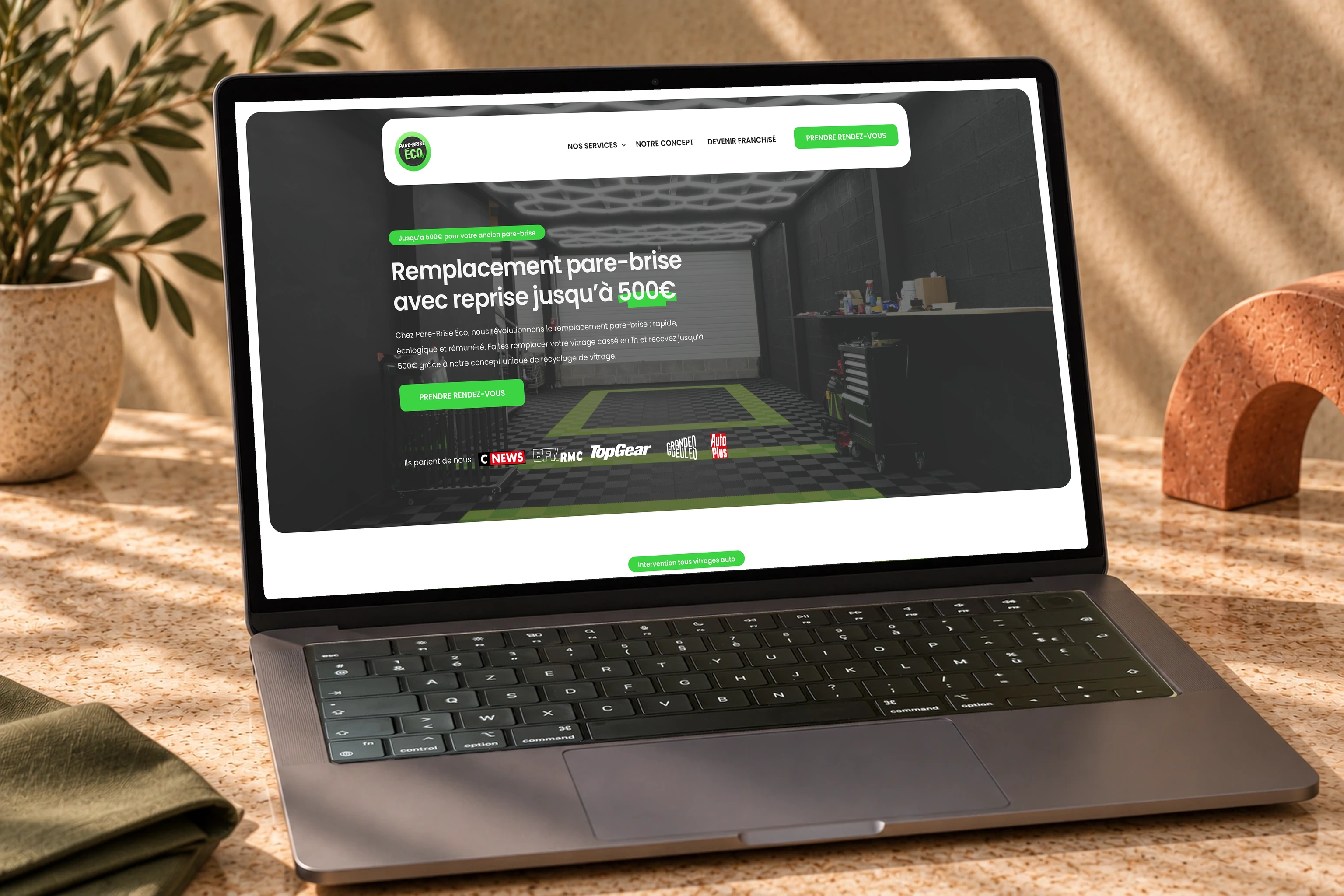
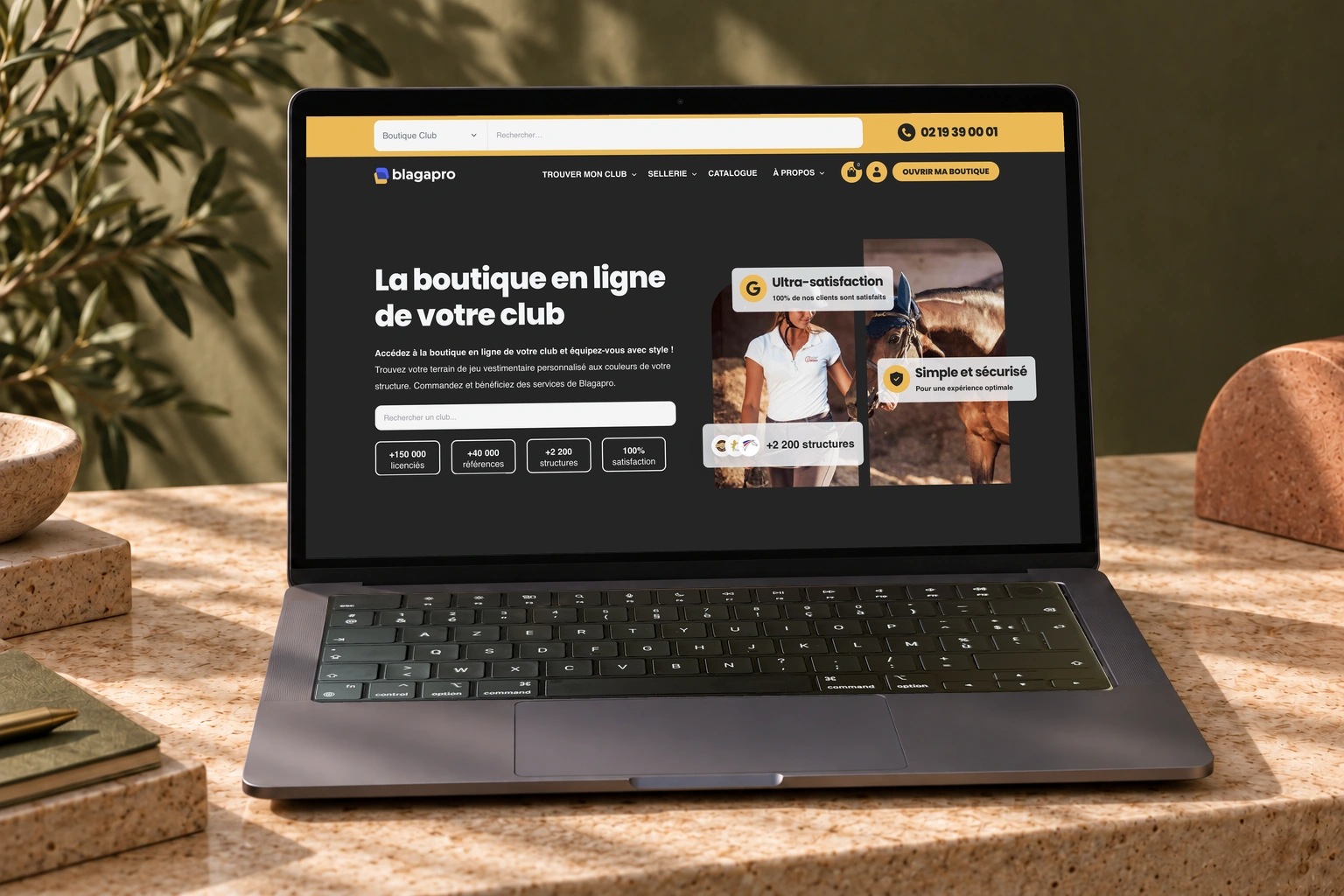
The Pare-Brise Éco case study describes websites, business applications, API connections and team support. It offers a concrete discussion of the relationship between software and operations. Blagapro is presented as a product concept with production workflows, rather than as a claimed client result. These examples help explain choices; they are not promises that every organisation will achieve identical outcomes.
Can you take over an existing application?
Yes, subject to reviewing the available code, access rights, dependencies and data. That review distinguishes targeted fixes, a progressive takeover and a rebuild. Findings should precede a commitment to a delivery date. Prepare a description of the incidents and the repository access arrangements without placing confidential credentials into a public contact form.
How do we start working with Gabriel Genoni?
Describe your business, the most difficult everyday bottleneck and the first task you want to simplify. A free thirty-minute initial conversation helps establish whether the project fits. Any detailed audit is scoped and priced separately. You can then decide on the next step with a clear understanding of responsibilities, deliverables and budget.

developpeurs.com
Gabriel Genoni
Founder and your direct contact. Together, we clarify the scope, coordinate the required expertise and review the agreed deliveries.
Meet developpeurs.com